Spring is the most important time of year for North Carolina lawns. After a long winter dormancy, your turf is ready to burst into growth — and the decisions you make in February, March, and April set the tone for how your lawn performs all summer long. Whether you have Bermuda in the Sandhills or Fescue in the Piedmont, this guide covers the timing, mowing, watering, and feeding that produce a lush, resilient lawn.
When to Start Spring Lawn Care in NC
Timing depends on your grass type and location. In central North Carolina — including Sanford, Pinehurst, Southern Pines, and the surrounding areas — here is the timeline:
Warm-Season Grasses (Bermuda, Zoysia):
- Late February: Apply pre-emergent herbicide when soil temps reach 55°F
- March: First mow when the grass begins active growth
- April: Begin your fertilization program
- May: Full growing season — regular mowing and maintenance
Cool-Season Grasses (Fescue):
- February: Apply pre-emergent for crabgrass prevention
- March: Resume regular mowing at 3.5–4 inches
- April: Light fertilization if needed (fall is the primary feeding time)
- May: Raise mowing height as temperatures climb
Pre-Emergent Timing Is Everything
The single most important spring task is applying pre-emergent weed control at the right moment. In Lee, Moore, Harnett, and Chatham counties, soil temperatures reach the 55°F crabgrass-germination threshold in late February to early March. Apply too early and the product breaks down before crabgrass germinates; apply too late and you have missed the window entirely.
Mowing Through the Spring Growth Surge
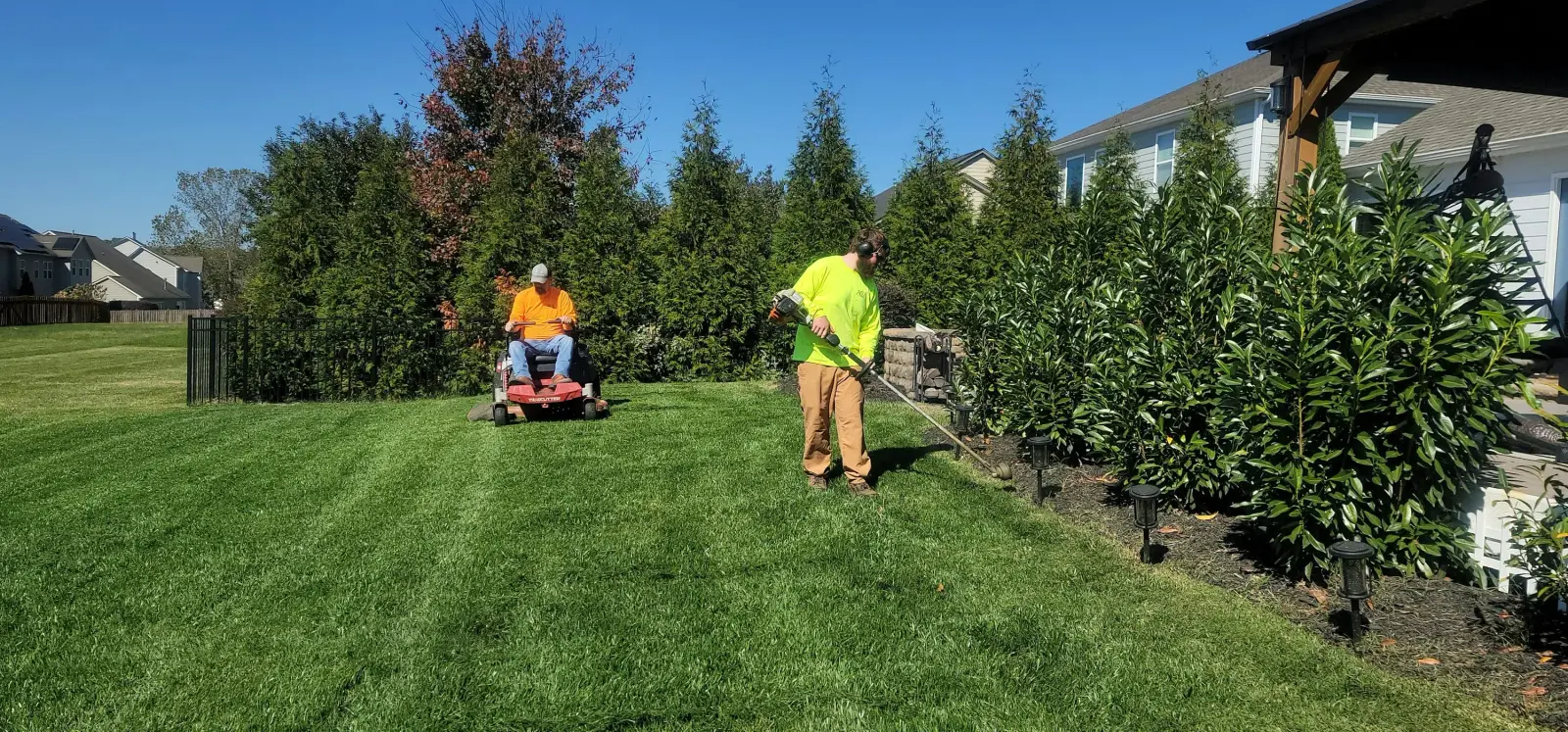
Warmer temperatures plus spring rains make lawns grow explosively. The key rule is the one-third rule: never remove more than one-third of the grass blade in a single cut. Scalping stresses the turf and invites pests and disease. During the peak surge, that usually means mowing every 5 to 7 days rather than on a fixed weekly date. Keep the blade sharp — a clean cut heals faster and looks better than the ragged tearing a dull blade leaves behind.
Watering: Deep and Infrequent
Spring often brings ample rain, but dry spells happen. Aim for about one inch of water per week, including rainfall — a simple rain gauge makes this easy to track. Deep, infrequent watering beats shallow, frequent watering because it drives roots down, which is exactly the resilience your lawn needs before summer heat arrives. When you do irrigate, run zones early in the morning to minimize evaporation and reduce the risk of fungal disease. If you have an in-ground system, start the season with a proper irrigation startup and inspection.
Fertilization and Soil Testing
As your lawn wakes up it is hungry for nutrients, and a spring feeding fuels healthy recovery. A balanced, slow-release nitrogen fertilizer promotes steady green-up without forcing an unmanageable growth spike. Before you feed, get a soil test — North Carolina soils vary widely, from Lee County's heavy clay to Moore County's sand, and a test tells you exactly what your lawn needs (including whether it needs lime to correct acidic pH). That takes the guesswork out of feeding and makes every dollar count.
Aeration and Overseeding
For Fescue lawns, spring is not the ideal time to aerate and overseed — fall is better, when new seed can establish without summer heat stress. For Bermuda and Zoysia, late-spring aeration (May–June) relieves winter compaction and promotes thicker growth heading into the season. Central NC's clay soils compact hard over winter, so aeration matters more here than in sandy areas.
The Bottom Line
Spring lawn care in North Carolina is all about timing: pre-emergent on schedule, mowing by the one-third rule, deep and infrequent watering, and feeding matched to a soil test. Do those well and your lawn is set up for the whole year. If you would rather leave the timing to professionals, our membership plans handle every step on the right schedule for your specific grass type across Sanford, Pinehurst, and beyond. Call 919-478-1852 or request a free quote.

Ready to get started?
Request a free quote and let our team take care of your property.